Your Guide to Buying Property and Getting a Mortgage in France as a Non-Resident
Here are our top tips and guidance for buying a property and getting an overseas mortgage in France
As featured in...



About This Guide
France’s culture and landscapes make it a popular destination for those seeking a home abroad. Whether for a permanent residence, holiday home, or investment, the real estate market offers a range of options. For non-residents navigating the buying process and securing a mortgage, key questions arise:
- How does the buying process work in France
- What are the steps to secure a mortgage?
- What legal requirements should you know?
- How long does it take?
In this guide, renowned property expert Simon Conn and his team of France specialists cover everything you need to know. With their expertise, you’ll navigate the property purchase process, understand mortgage options, and learn about legal and financial considerations to make a safe and informed investment in France.
Scroll down to read this guide or download the printable version here.
Chapter Menu
Click to skip to that section:
1. Mortgage Types Available for UK Buyers
2. Navigating French Mortgage Providers and Brokers
3. Current Mortgage Rates and How to Use Mortgage Calculators
4. Legal Requirements and Tax Considerations
5. Associated Costs Beyond the Mortgage
6. Popular Property Regions in France for International Buyers
Download Now
If you’d like to download a free printable version of this guide, click here.
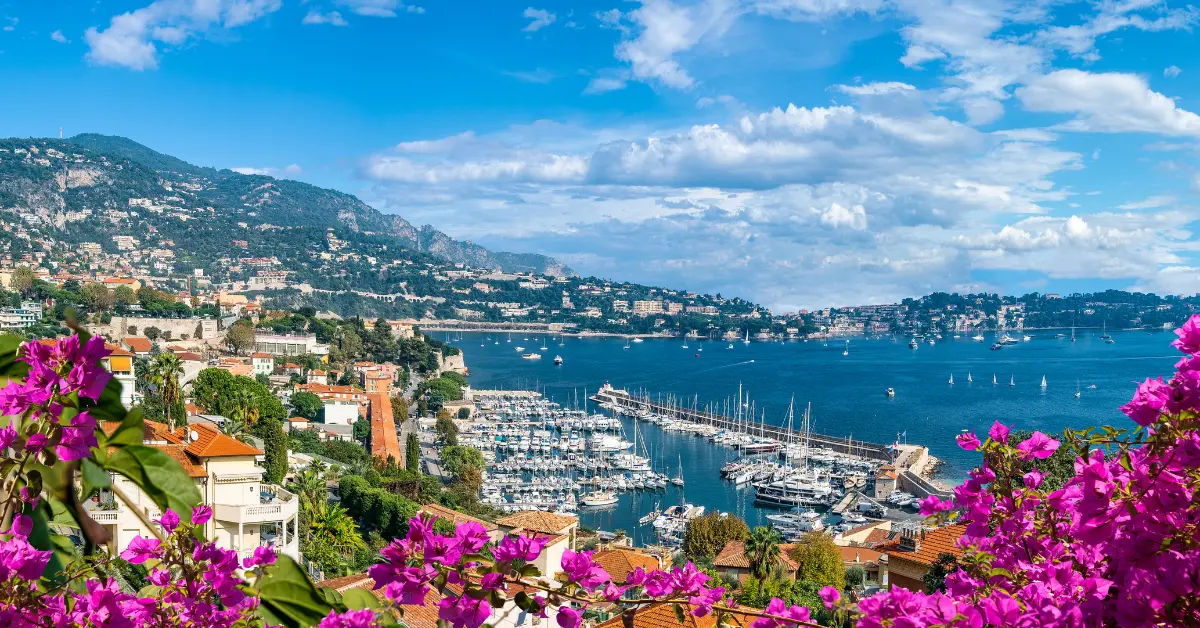
Buying Property & getting a mortgage in france
Key Takeaways
-
-
Fixed-Rates Provide Stability: Fixed-rate mortgages are the most popular option for international buyers, offering long-term certainty for monthly payments and helping manage currency fluctuations.
-
The Strict 35% Rule: French law applies a strict affordability limit. Your total monthly debt repayments (including existing debts and the new overseas mortgage) must not exceed 33% to 35% of your net monthly income.
-
Budget 10% to 15% for Extra Costs: Beyond the purchase price and your 15%–30% cash deposit, budget an additional 10% to 15% from your savings. This covers Notaire fees (7–8% on older properties), mandatory life insurance, bank fees, and mortgage registration.
-
The “Compromis de Vente” & “Clause Suspensive”: You sign this legally binding preliminary contract early, which triggers a mandatory 10-day cooling-off period. Crucially, your lawyer must insert a “subject to finance” clause to protect your deposit if your mortgage is declined.
-
Expert Brokers & Clean Finances are Essential: French underwriters are highly risk-averse and require a spotless credit history with 3 to 6 months of traceable income. Using an independent, specialist overseas mortgage broker is highly recommended to correctly package your financial profile and find the right international lenders.
-
Introduction
France: A Prime Destination for Non-Resident Property Buyers
Buying a home in France is a lifelong dream for many international buyers. Whether you are looking for a holiday retreat, an investment property, or a retirement villa, understanding how to finance that dream is your most important first step.
If you are used to a local mortgage, buying a property in a different country can be challenging. Securing an overseas mortgage requires careful planning, stringent documentation, and an understanding of French lending laws. This guide explains exactly how to navigate the process safely and successfully.
Note: This guide was written and last updated in May 2026. Be aware that some of the figures and rules mentioned may have changed if you read this more than a few months after this date.
1. Can you get a mortgage in France as an expat or foreign national?
Yes, international buyers, including expats and foreign nationals, can obtain a mortgage in France, subject to meeting the criteria. Cross-border lending has become more challenging, so mortgage solutions for property in France are only available through French-based lenders or international specialist lenders.
Overseas lending criteria and interest rates vary by country and depend on an applicant’s overall financial profile, the property’s location, valuation, the amount being applied for, and the loan-to-value. For non-residents, French banks typically cap Loan-to-Value (LTV) between 70% to 85%, meaning a larger cash deposit will be required than for local mortgages.
Simon’s Expert Tip: “In my decades of experience, the biggest hurdle for international buyers is proving a clean, traceable financial history to risk-averse French underwriters. They will scrutinise your last three to six months of payslips and recent personal tax returns or local equivalents.”
2. French Mortgage Eligibility: The Strict 35% Rule
How an overseas mortgage differs from your local lending criteria usually comes down to strict affordability checks. French lenders apply a legal affordability limit: your total monthly debt repayments, including your existing mortgage, personal debt repayments and the new overseas mortgage, must not exceed 33% to 35% of your monthly income after tax.
Furthermore, please note that some countries do not include any existing or new rental income in any affordability calculation.
Minimum Requirements for International Buyers:
- Clear Credit History: You cannot secure a loan if you have any past adverse credit history, regardless of the circumstances.
- Proof of Income: You will need your last 3 to 6 months of payslips and your last 3 years’ personal tax returns (e.g., Form 1040 in the USA, SA302s in the UK, etc.).
- Age Limits: The mortgage term must typically end before the eldest borrower reaches 70 to 75.
- High Net Worth Exemption: If the property you are purchasing is over £2 million (or the equivalent in local currency) and qualifies under a ‘high-net-worth scheme’, debt-to-income limits may not apply; these are dealt with on a bespoke, case-by-case basis.
3. What are the current French mortgage rates?
Overseas mortgage interest rates fluctuate and change frequently. Therefore, it is impossible to quote specific fixed or variable rates upfront.
However, unlike many local markets, the French mortgage market is built on long-term stability. Securing a long-term fixed-rate product provides certainty in your monthly payments, which is highly beneficial when you are managing currency fluctuations. Your precise interest rate will be determined by your overall personal financial profile, the property’s valuation, the amount borrowed and the loan-to-value ratio.
4. Types of French Mortgages Available to Expats
The most popular option for international buyers is a fixed-rate mortgage. Variable-rate mortgages may also be available. Interest-only mortgages are extremely rare and are only considered on a strict case-by-case basis.
If you are buying an investment property, France does not have dedicated “Buy-to-Let” mortgage products. You simply apply for a standard residential French mortgage and notify the lender of your intentions.

5. The Property Buying Process in France (Step-by-Step)
Buying property in France takes time, and you should expect common delays, including national holidays, lengthy legal verification processes and valuations.
- Agreement in Principle (AIP): Before viewing properties, speak to an overseas mortgage broker to assess your affordability and secure an AIP.
- Signing the Compromis de Vente: Once your offer is accepted, you sign this legally binding preliminary contract. You will then have a mandatory 10-day cooling-off period.
- The Clause Suspensive (Subject to Finance): Please ensure your independent lawyer inserts the wording “subject to an acceptance for a mortgage” into the sales contract. This ensures that if your mortgage is declined or there are any unforeseen legal or valuation issues concerning the property, your deposit is protected.
- The Mortgage Offer: Once the bank issues your formal mortgage offer, French law dictates a mandatory 11-day cooling-off period.
- The Acte de Vente: The final transaction takes place at the office of a Notaire who ensures all taxes are paid and legally transfers the property title.
6. Hidden Costs, Taxes, and Mandatory Insurance
When budgeting, allow an extra 10% to 15% on top of the purchase price to cover mandatory taxes, bank arrangement fees and compulsory life insurance.
Please note that the deposit and any setup costs must be funded by existing savings. You cannot raise the deposit by taking out a loan against your main home, as this could increase your debt-to-income ratio and likely result in the mortgage application being denied.
- Notaire Fees & Transfer Tax: For older properties, expect to pay 7%-8% of the purchase price. This includes the government transfer tax (droits d’enregistrement), which is around 5.8%. For new builds, this drops to 2%-3%.
- Mortgage Registration Fee: Expect to pay an additional 0.5% to 1% of the loan amount to legally register the mortgage with the French land registry.
- Local Property Taxes: As an owner, you are liable for the annual land tax (taxe foncière). If the property is a second home or holiday let, you will also pay the occupancy tax (taxe d’habitation), though this has now been abolished for primary residences.
- Co-Ownership Fees (Charges de Copropriété): If you are buying an apartment or a property within a shared complex, you will pay regular maintenance charges for common areas, elevators and groundskeeping.
- Assurance Emprunteur (Life Insurance): French banks legally require you to take out a life insurance policy assigned to the mortgage to cover the debt in the event of death.

7. Why You Need a Specialist Overseas Mortgage Broker
With over 40 years’ experience in the overseas property market, Simon Conn works with overseas lending sources that understand local mortgage requirements. They offer relevant advice and research the available mortgage products based on your personal circumstances/requirements.
Applying for a mortgage in a foreign language, with unfamiliar documentation requirements, can lead to simple mistakes. Local branch staff often have little experience with the income documentation in your country. By using an independent specialist, you ensure your financial profile is packaged correctly for the right international lenders, vastly improving your chances of securing the property.
8. Popular Property Regions in France for International Buyers
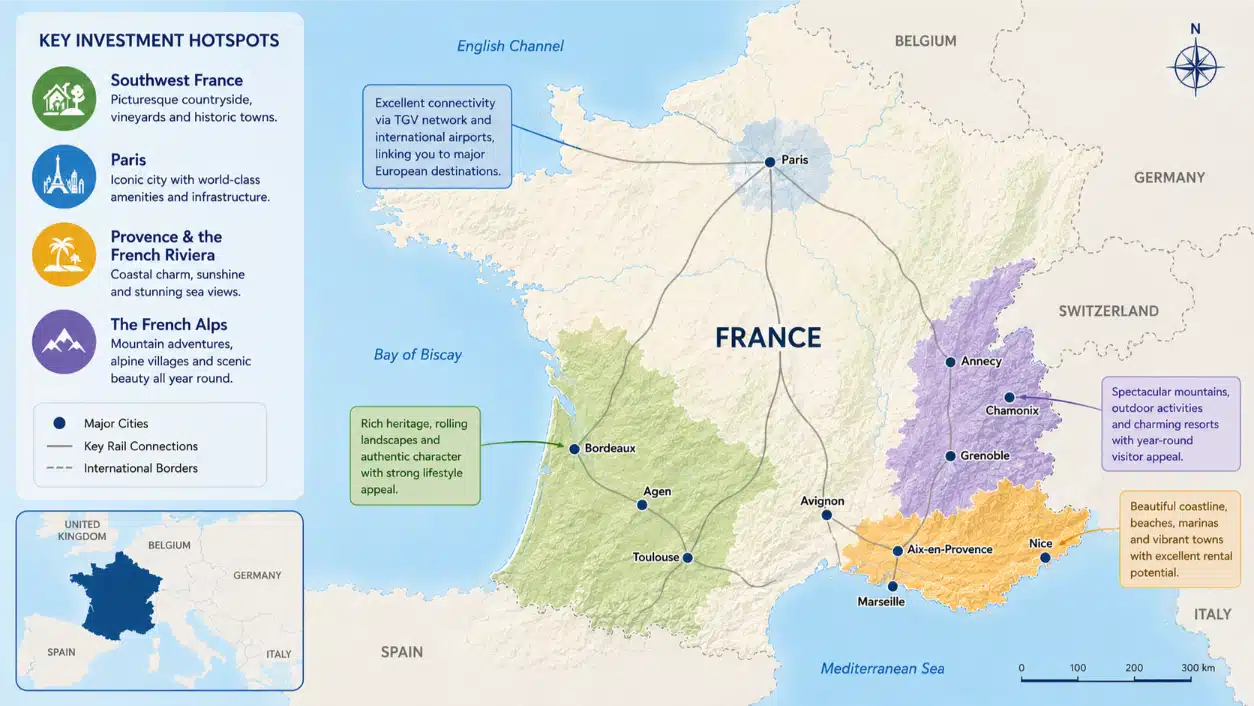
French lenders prefer to finance purchases in areas with proven resale demand. Popular regions for international buyers include:
- Southwest France (Dordogne, Lot-et-Garonne, Charente): Highly sought after for a traditional French lifestyle, a mild climate and more affordable property prices with strong holiday rental potential.
- Paris: The capital attracts global investors seeking culture and strong long-term capital growth. However, mortgages here often require larger deposits due to premium valuations.
- Provence & The French Riviera (Côte d’Azur): Top choices for luxury Mediterranean living and excellent short-term rental yields, though property prices here are among the highest in the country.
- The French Alps: Ideal for ski and outdoor enthusiasts, the Alps offer high seasonal rental yields and strong year-round tourism appeal.
Frequently Asked Questions (FAQ)
Can I use a local domestic mortgage provider to buy a property abroad?
Local domestic high-street banks rarely offer mortgages secured against overseas properties. You will generally need to use an overseas lender or an international private bank.
Do I need an independent solicitor?
Yes, ideally, one qualified in the country where the property is located, to protect your interests and ensure the clause suspensive is properly written into your contract.
What is the minimum deposit for a French mortgage?
Lending criteria vary, but non-residents typically need a minimum cash deposit of 15% to 30% of the purchase price, plus an additional 8% to 12% of the purchase price to cover legal fees and taxes. This must come from existing savings, not from additional borrowing.
Do overseas mortgage rates differ from local mortgage rates?
Yes, and securing an alternative fixed-rate product in Euros can provide certainty in your monthly payments, especially when you are managing currency fluctuations.
Conclusion
Investing in a French property as a UK resident can be an exciting and rewarding opportunity, whether for a holiday home, retirement, or a permanent move. By understanding the nuances of the French real estate market, from securing competitive fixed-rate mortgages to navigating the unique legal protocols involving the Notaire and the Compromis de Vente, buyers can make informed decisions and manage their investment effectively.
Simon Conn has over 40 years of experience and, along with his professional team, is here to help you navigate the complexities of the process. As a specialist in cross-border property purchasing, Simon Conn can help you avoid common pitfalls, understand all the costs involved, and enjoy the benefits of owning a property in France. Connect with an expert to turn your property aspirations into a secure reality.
For personalised assistance and to ensure a smooth journey, contact Simon Conn and take the next step towards buying your dream property in France.
Free Overseas Mortgage Assessment
If you require a mortgage for financing your overseas property, please complete our questionnaire and we will let you know if we can assist further.
Definitions
“EURIBOR”
EURIBOR (Euro Interbank Offered Rate) is the benchmark interest rate at which banks in the Eurozone lend to each other. It is calculated daily and represents the average rate that leading European banks charge each other for Euro-denominated loans. If you take out a variable-rate French mortgage, your interest rate will typically be calculated as a set margin above the current EURIBOR rate.
Download This Guide